Most employers with a January 1 renewal don’t start thinking about it until October. By then the renewal number has already arrived, the timeline is compressed, and the pressure to make a decision quickly leaves little room for anything other than a reactive response. Whatever options might have been available six months earlier have narrowed significantly, and the leverage an employer could have had has largely evaporated.
The employers who consistently achieve better outcomes at renewal, whether that means a more competitive rate, a smarter plan design, a better-fit carrier, or a fundamentally different funding structure, are rarely doing anything more sophisticated than simply starting earlier. Third quarter, meaning right now, is the most underutilized window in the benefits calendar for employers with January renewals. What you do between now and September has a direct and measurable impact on what your options look like in October and November.
This post explains why the third quarter matters so much, what employers should be doing during this window, and what the difference looks like between an employer who uses it well and one who does not.
Why Timing Is Everything in Benefits Renewal
The renewal process has a rhythm that most employers do not fully understand until they have been through a difficult one. Here is how it typically unfolds for a January 1 plan year.
In October, the carrier issues the renewal. For most employers this is the first concrete signal of what the coming year will look like financially. By this point, however, much of what will shape that renewal has already been decided. The carrier has been analyzing your claims data for months. Their pricing assumptions are largely set. And the window to meaningfully influence the outcome through plan design changes, alternative market exploration, or funding structure conversations is closing fast.
In November, employers who have not been preparing scramble. They ask their broker to shop the market, often with a compressed timeline that limits how thoroughly alternatives can be evaluated. They make plan design decisions under deadline pressure. They communicate changes to employees during a rushed open enrollment. None of these conditions produce the best outcomes.
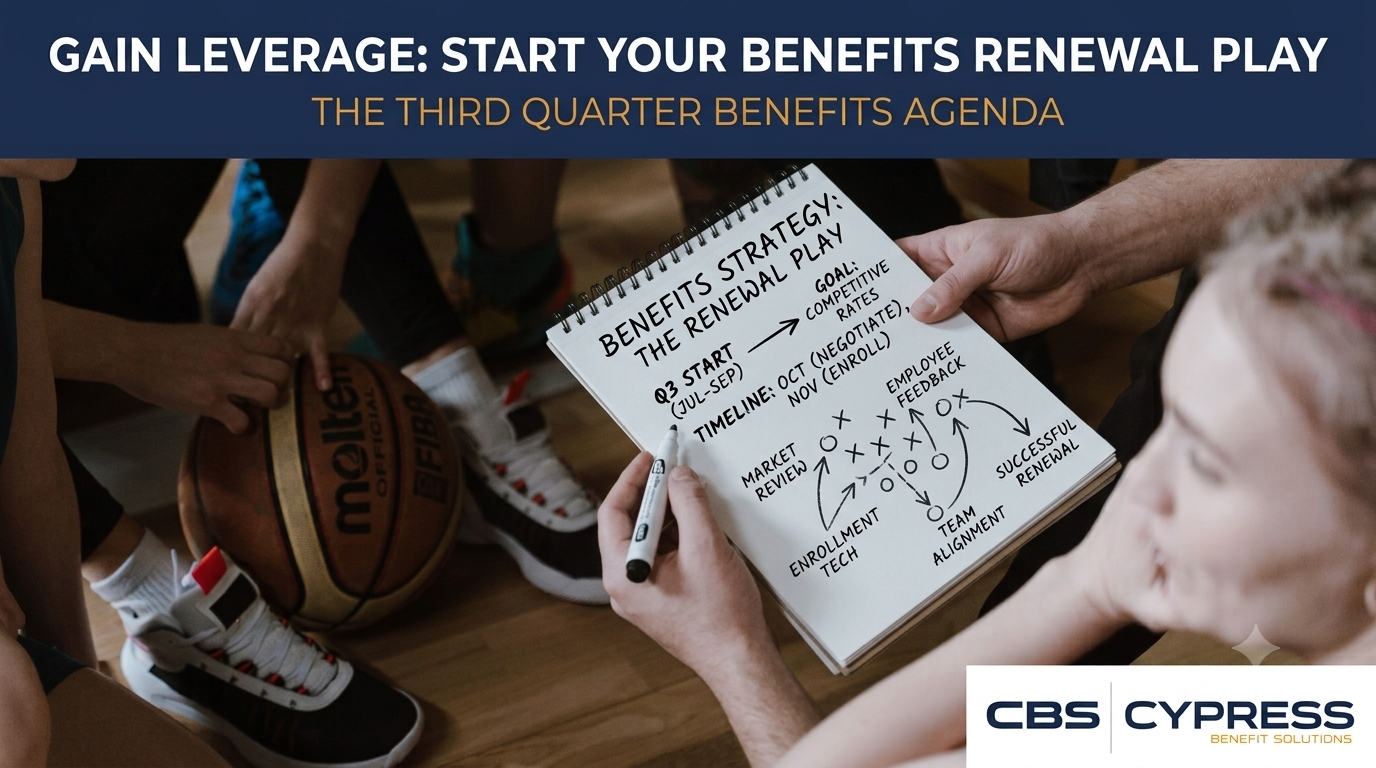
Contrast that with an employer who started the process in July. By October they have already reviewed their claims data, identified what is driving their costs, evaluated alternative funding structures if appropriate, and had substantive conversations with their broker about what the market looks like. When the renewal number arrives they are not surprised by it. They understand the factors behind it, they have already considered their options, and they are in a position to make a deliberate decision rather than a reactive one.
The difference in outcomes between these two approaches is real and it compounds over time. Employers who are consistently proactive tend to see more stable cost trajectories, better plan designs, and stronger employee satisfaction with their benefits. Those who are consistently reactive tend to find themselves absorbing increases and making trade-offs they would rather not make, year after year.
What to Do Right Now: The Third Quarter Benefits Agenda
The third quarter of the year is the right time to work through a set of conversations and analyses that most employers either skip entirely or leave until it is too late to act on them effectively. Here is what that agenda looks like.
Pull Your Current Year Claims Data and Review It With Your Advisor
If you are on a self-funded or level-funded plan, your claims data for the first six months of the plan year is available and worth reviewing now. What is driving utilization? Are there specific cost categories that are running above expectations? Are preventive care rates where you would want them to be? Is pharmacy spend tracking in a direction that warrants attention before renewal?
Even if you are on a fully insured plan, your carrier may be able to provide aggregate utilization data that gives you a directional sense of how the year is tracking. This information is not just useful for understanding your renewal. It is the foundation of any meaningful plan design conversation and the starting point for a data-informed negotiation with your carrier.
Benchmark Your Current Plan Against the Market
When did you last have a conversation with your advisor about whether your current plan design, contribution structure, and overall cost per employee are competitive relative to similar employers in your industry and region? For most employers the honest answer is that this conversation has not happened recently, if at all.
Benchmarking data tells you whether you are spending above or below market on benefits, whether your deductible and out-of-pocket structure is typical for your workforce profile, and whether there are specific areas where your plan is either over-investing or creating unnecessary gaps. This context is enormously valuable heading into a renewal conversation because it separates the question of whether your renewal increase is reasonable from the separate question of whether your current plan design is the right one in the first place.
Evaluate Whether Your Current Funding Structure Still Makes Sense
If you have been on a fully insured plan for several years and have never had a serious conversation about whether self-funding or level-funding might be a better fit, third quarter is the right time to have it. This analysis takes time to do properly. It requires a review of your claims history, your workforce demographics, your cash flow position, and the current stop-loss market. None of that can happen in the two weeks before a renewal deadline.
We have covered self-funding and level-funded plans in detail in previous posts. The short version is that a meaningful number of employers in the 50 to 200 employee range are paying more than they need to on a fully insured plan and would benefit from a structured evaluation of alternatives. Third quarter is when that evaluation can actually be completed thoughtfully rather than rushed.
Assess Your Carrier and Network Relationships
Is your current carrier the right long-term partner for your plan? Is the network your employees are using performing well in terms of access, quality, and cost? Have there been network disruptions or employee complaints about provider access over the past year that deserve attention at renewal?
These are questions that are easy to defer when renewal season feels far away and easy to overlook when it arrives with deadline pressure. Addressing them now gives your broker time to evaluate alternative carrier relationships, explore different network configurations, and bring you options rather than simply presenting the incumbent renewal.
Clarify Your Goals for the Coming Plan Year
What do you actually want from your health plan in 2027? This question sounds simple but most employers have never answered it explicitly in the context of a benefits conversation. Is the primary goal managing cost growth to a defined target? Improving employee satisfaction with the plan? Adding specific benefits that would help with recruiting or retention? Transitioning to a different funding structure over a defined timeline?
Having a clear set of goals before renewal season arrives changes the nature of every subsequent conversation. Instead of reacting to whatever the carrier proposes, you are evaluating proposals against a standard you have already defined. That is a fundamentally different and more productive dynamic, and it almost always produces better outcomes.
Talk to Your Employees Before Renewal, Not After
One of the most consistently overlooked inputs in the renewal process is employee feedback. Most employers communicate benefits changes to employees after the decisions have been made. The employers who do it well solicit input before renewal so that employee priorities, pain points, and preferences can actually inform the plan design decisions being made.
A brief survey asking employees what they value most in their current benefits, what frustrates them, and what they wish were different takes relatively little time to administer and can surface information that significantly improves the quality of the decisions made at renewal. It also signals to employees that their input is valued, which has its own positive effect on how changes are eventually received.
What the Third Quarter Does Not Have to Be
It is worth being clear about what this agenda does not require. It is not a comprehensive overhaul of your entire benefits program. It is not a commitment to making any particular change. It is not a lengthy formal process that competes with everything else demanding your attention in the summer months.
Most of what is described above amounts to a handful of substantive conversations with a knowledgeable benefits advisor, a review of data that already exists, and a clarity of purpose about what you are trying to accomplish. The time investment is modest. The payoff in terms of better options, better decisions, and reduced renewal pressure is significant.
The employers who feel most in control of their benefits costs are rarely doing anything that is complicated or inaccessible. They are simply starting earlier and engaging more deliberately with a process that most employers treat as an annual interruption rather than an ongoing strategic responsibility.
How Cypress Benefit Solutions Approaches This Time of Year
Third quarter is one of our favorite times of year to work with employers because it is when the most meaningful strategic work can actually happen. We are not competing with renewal deadline pressure. We have time to review your data thoroughly, benchmark your plan against the market, evaluate alternatives, and help you arrive at renewal season with a clear picture of what you want and why.
If your January renewal has historically felt like something that happens to you rather than something you navigate with confidence, that is a pattern worth breaking this year. The window to do that is open right now and it will not stay open for long.
Reach out anytime if you would like to start the conversation. We would genuinely welcome it.