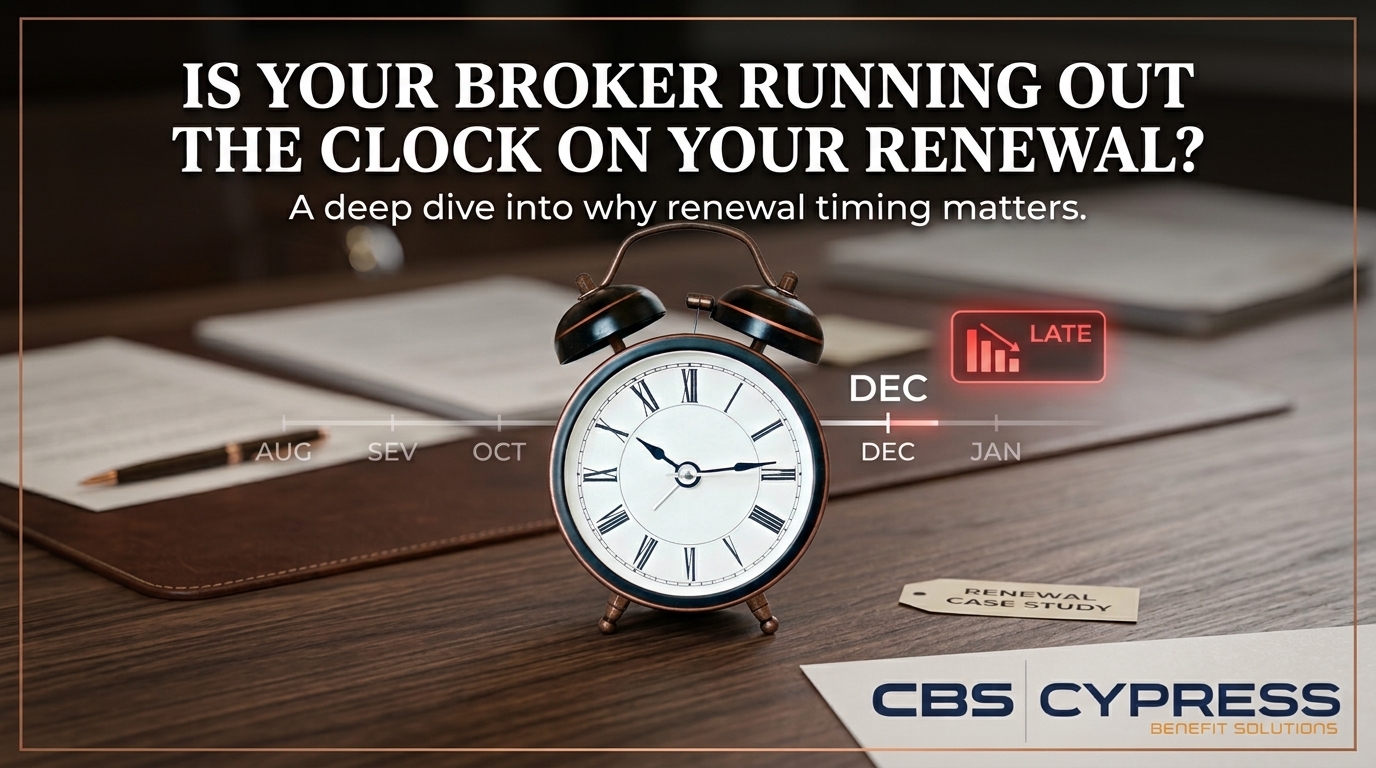
For an employer with a January 1 plan year, the renewal often arrives in November. By the time it lands, open enrollment materials are already being drafted, leadership is focused on year end, and the idea of starting a fresh search for a better option feels impractical. The renewal gets approved, the plan year rolls over, and the cycle repeats.
Sometimes that timing is outside everyone’s control. Other times it is a pattern, and the pattern tends to serve someone other than the employer. This post explains why renewal timing matters, when a late renewal is and is not the broker’s doing, what a healthy timeline looks like, and what to ask your advisor so the clock is working for you rather than against you.
Why the Timing of Your Renewal Matters
A meaningful market analysis takes time. Carriers need a current census and claims information, underwriting needs to run, quotes need to be compared against the incumbent on more than just price, and any change of carrier or funding structure needs to be implemented before the plan year begins. That work takes weeks, and in some cases months. When a renewal reaches the employer with 30 to 45 days left, there is no realistic way to complete it.
At that point, the decision is no longer between the renewal and the market. It is between the renewal and a scramble. Most employers choose the renewal, which is exactly the outcome a late timeline produces. A renewal with no market analysis is also the easiest result for an advisor to deliver, since marketing a plan takes real effort and may end in a change. None of this requires bad intent. It only requires that no one has a reason to start early.
When a Late Renewal Is Not the Broker’s Fault
It is worth being fair about this. Carriers control when renewals are released, and some release them later than employers and advisors would like. Federal guidance requires carriers to give small group employers written notice at least 60 calendar days before the renewal date, but larger fully insured groups and self-funded plans are not covered by the same requirement, and renewals for those groups can arrive on a shorter runway.
A late rate by itself, then, is not proof of anything. What matters is what the advisor was doing before the rate arrived. An advisor who started the conversation months earlier, reviewed claims, discussed goals, and had alternatives ready can respond quickly when a late renewal lands. An advisor who waited for the carrier has nothing to respond with.
What a Healthy Renewal Timeline Looks Like
Every plan is different, and self-funded and level-funded arrangements often need more lead time than fully insured plans. As a general rule of thumb, a calendar year plan moves through these stages.
- 150 to 120 days out (August to early September): review claims, utilization, and plan performance, and agree on goals for the renewal.
- 120 to 90 days out (September to early October): prepare the census, request pre-renewal projections from the incumbent, and market the plan to alternative carriers and funding structures.
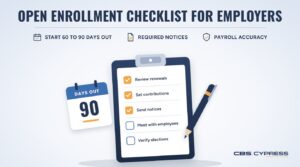
- 90 to 60 days out (October to early November): receive and negotiate the renewal, compare it against the market, and make a decision.
- 60 to 30 days out (November): finalize plan and contribution decisions and prepare open enrollment materials and employee communications.
- 30 days out and beyond (December): run open enrollment and complete implementation.
If your renewal conversations have not started until the rate arrived, you have likely been working from the wrong end of this timeline.
Warning Signs That the Clock Is Working Against You
- There is no conversation about the renewal until the rate arrives, including any discussion of goals, claims, or alternatives.
- The renewal reaches you within the last 45 to 60 days, and it does so year after year.
- The advice is consistently to renew as presented, with a minor plan adjustment, every year.
- There is no market comparison, or the comparison is limited to a narrow set of alternatives.
- Requests for claims data, the carrier’s renewal documents, or the assumptions behind the rate go unanswered or are delayed.
- Urgency is used to discourage questions, with some version of the message that there is no time left to look at anything else.
What You Can Do If You Are Already Behind
If your renewal is close and no one has done the groundwork, there are still steps worth taking. Ask for the full renewal document and your claims and utilization data now. Ask the incumbent to negotiate and to present alternative plan designs. Ask whether any alternatives can realistically be quoted in the time that remains, keeping in mind that some funding structures need underwriting time that a late renewal does not leave.
It also helps to know that changing brokers is less disruptive than most employers expect. A change of broker of record typically does not change your carrier, your plan, or your employees’ coverage, and it can be handled in advance of the next cycle. The best time to evaluate an advisor is in the months after a renewal, not the weeks before one. Setting a renewal timeline in the spring, with dates attached, is far easier than trying to create options in November.
Questions to Ask Your Advisor
These are the questions worth putting to your current advisor before your next renewal cycle begins.
- When will you begin work on my next renewal, and what will you bring me at each stage?
- Can I see a written renewal timeline with dates attached?
- Will a market analysis be completed every year, and what does it include beyond the incumbent carrier?
- How do you decide which carriers and funding structures to bring to me?
- Will I receive claims and utilization data before the rate arrives?
- If the renewal comes in late, what is your plan?
At Cypress Benefit Solutions, we believe a renewal should be a process that starts months before the rate arrives, rather than an event that happens to an employer in November. If you would like a second opinion on your renewal timeline, or on whether you have seen the full market, we would welcome the conversation.