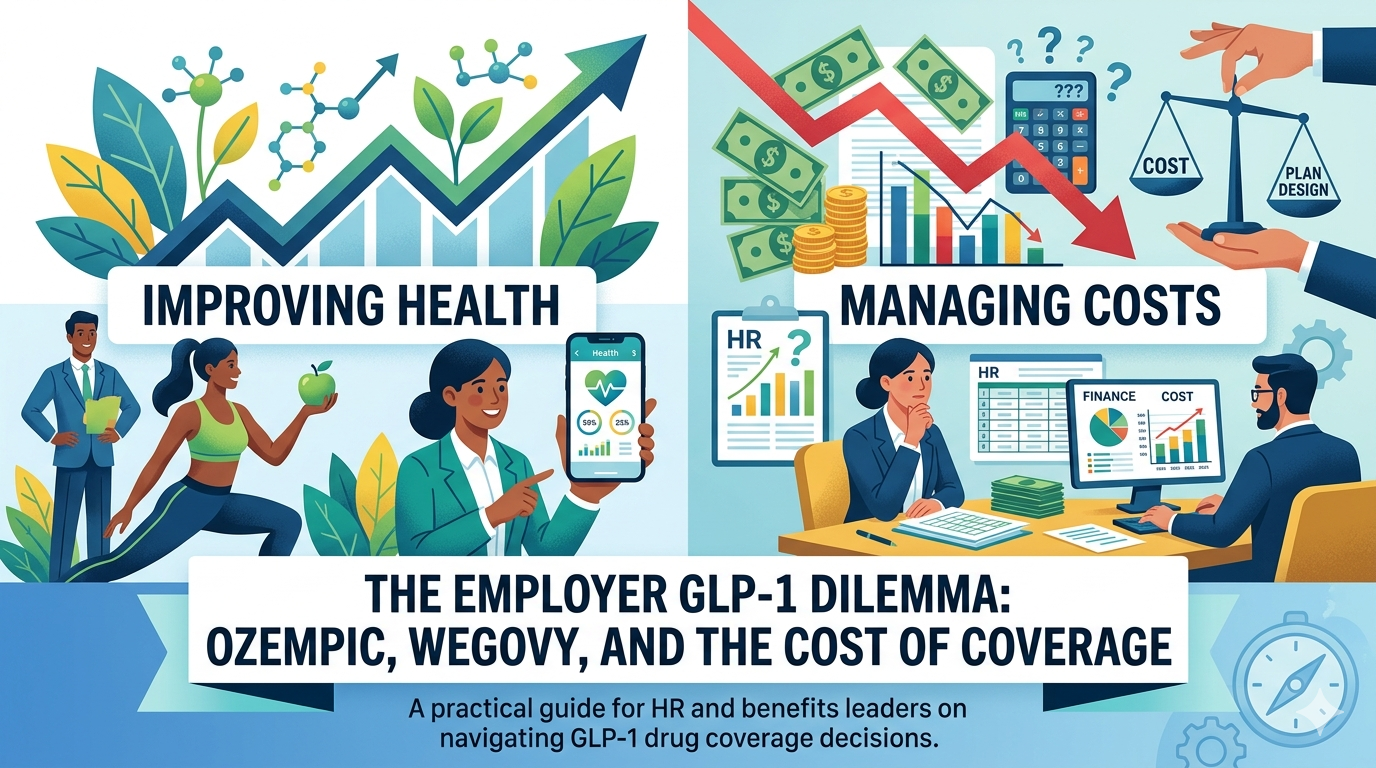
If you haven’t already had a conversation about GLP-1 drugs and your health plan, that conversation is coming. These medications, originally developed to treat type 2 diabetes and now widely prescribed for weight loss, have become one of the most significant cost variables in employer-sponsored health plans today. Understanding what they are, what they cost, and how to approach coverage thoughtfully is now a practical business decision for employers of all sizes.
This post is designed to give you a clear picture of the landscape and help you think through the decisions your plan may need to make.
What Are GLP-1 Drugs and Why Are They Everywhere
GLP-1 stands for glucagon-like peptide-1, a hormone that plays a role in regulating blood sugar and appetite. The medications in this class, including semaglutide (sold under brand names like Ozempic, Wegovy, and Rybelsus) and tirzepatide (Mounjaro and Zepbound), work by mimicking this hormone to reduce appetite, slow digestion, and improve blood sugar control.
They were initially approved by the FDA to treat type 2 diabetes, and in that context they’ve been available and covered by most health plans for years. The shift happened when clinical trials demonstrated significant weight loss results in people without diabetes, leading to FDA approval of these drugs specifically for chronic weight management. That approval, combined with heavy consumer marketing, created an enormous surge in demand.
For employers, the math got complicated quickly. These medications can cost between $800 and $1,400 per month per patient at list price. When even a small number of employees begin taking them, the impact on pharmacy spend can be substantial.
The Core Decision Employers Face
At its simplest, every employer with a health plan needs to decide whether to cover GLP-1 drugs for weight loss, for diabetes only, or not at all. Each path carries tradeoffs and there is no universally right answer. The right answer depends on your workforce, your plan structure, your cost tolerance, and your values as an employer.
Cover for Diabetes Only
Many employers have chosen to cover GLP-1 drugs when prescribed for type 2 diabetes but not for weight loss alone. This is a defensible and common approach. It limits exposure to the highest-volume use case while still supporting employees with a diagnosed medical condition. The practical challenge is that the line between diabetes management and weight management is not always clean, and prior authorization processes require administrative effort to enforce.
Cover for Both Diabetes and Weight Loss
Some employers have chosen to cover GLP-1 drugs more broadly, including for weight management. The argument for this approach is that obesity is a recognized chronic condition with significant downstream health consequences, and that helping employees manage their weight may reduce other long-term costs related to cardiovascular disease, joint problems, and diabetes prevention. The counterargument is that the near-term cost impact can be significant, particularly for smaller employers, and that employees who stop taking the medication often regain weight, raising questions about long-term efficacy and cost-effectiveness.
Exclude Coverage Entirely
Some employers, particularly smaller ones with tighter budgets, have chosen not to cover GLP-1 drugs for weight loss at all. This limits cost exposure but may create tension with employees who are seeking access to these medications and may influence how employees perceive the overall generosity of the benefits package.
Cost Management Strategies for Employers Who Cover GLP-1s
For employers who decide to offer coverage for GLP-1 drugs, there are several strategies that can help manage the cost impact without eliminating access entirely.
Prior Authorization Requirements
Requiring prior authorization before covering a GLP-1 prescription ensures that coverage is limited to patients who meet specific clinical criteria. This might include a documented BMI above a certain threshold, evidence of at least one weight-related comorbidity, or a record of previous failed weight loss attempts. Prior authorization adds an administrative step but gives employers and their pharmacy benefit managers more control over who qualifies for coverage.
Step Therapy Protocols
Step therapy requires that patients try lower-cost treatment options before a more expensive medication is approved. In the context of weight management, this might mean documented participation in a structured weight loss program before a GLP-1 is covered. This approach can reduce unnecessary prescriptions while still providing a pathway to coverage for employees who genuinely need these medications.
Quantity and Duration Limits
Some plans place limits on how long a covered employee can remain on a GLP-1 drug for weight loss, or require periodic reassessment to confirm continued clinical need. While this requires careful design to avoid penalizing employees with legitimate ongoing needs, it can help manage the long-term cost trajectory of coverage.
Specialty Pharmacy Channeling
Working with a specialty pharmacy or a preferred pharmacy network can reduce the unit cost of these medications compared to retail pricing. Some pharmacy benefit managers have also negotiated rebates on GLP-1 drugs that can offset part of the cost. If your plan includes a pharmacy benefit manager, it is worth asking specifically what arrangements are in place for this drug class.
The Bigger Picture: What This Means for Your Plan
GLP-1 drugs are not going away. The pipeline of similar medications is growing, demand continues to increase, and the clinical conversation around obesity as a chronic condition is shifting in ways that will have long-term implications for coverage standards across the industry. Employers who treat this as a passing trend and avoid making a deliberate decision may find themselves making reactive choices under cost pressure later.
The employers who are navigating this most effectively are the ones who have looked at their actual claims data, assessed the potential cost impact across different coverage scenarios, and made a deliberate, documented decision that aligns with their workforce needs and financial reality. That decision may need to be revisited as the landscape evolves, but having a position is better than having none.
What About TrumpRx? A New Option Worth Understanding
In February 2026, the Trump administration launched TrumpRx.gov, a government-backed platform that offers discounted cash prices on dozens of brand-name medications, including Wegovy and Zepbound. The platform is built on Most-Favored-Nation pricing agreements with pharmaceutical manufacturers, meaning prices are intended to align with the lowest prices paid in other developed countries.
For employers and employees navigating GLP-1 costs, this platform is worth knowing about, but it comes with important limitations that are easy to miss.
Who TrumpRx Actually Helps
TrumpRx is designed for cash-paying patients, meaning people purchasing their medication without going through health insurance. For employees whose GLP-1 prescriptions are not covered by the employer health plan, this can be a meaningful option. Through the platform, Wegovy is available for as little as $149 per month and Zepbound starts at around $299 per month, significantly lower than the standard list price of $800 to $1,400 per month. For employees who would otherwise be paying full list price out of pocket, these discounts are real and worth pursuing.
The Key Limitations Employers Should Communicate
The savings on TrumpRx come with tradeoffs employees need to understand before bypassing their insurance. Purchases made through TrumpRx do not count toward the employee’s deductible or out-of-pocket maximum under their health plan. An employee who pays cash through TrumpRx all year is essentially paying twice, once for the drug and once toward a deductible they never satisfy through that spending.
TrumpRx is also only available to patients paying entirely out of pocket. And for employees whose plan does cover GLP-1 drugs, their insurance copay or coinsurance will often still be less than the TrumpRx cash price once their deductible has been met. The platform currently covers 43 medications from five manufacturers, so the formulary is limited compared to what a full pharmacy benefit provides.
How This Fits Into Your Overall Strategy
For employers who have decided not to cover GLP-1 drugs for weight loss, TrumpRx is a useful resource to share with employees seeking access to these medications on their own. It is more affordable than paying full list price and more straightforward than navigating individual manufacturer assistance programs. Pointing employees toward TrumpRx.gov is a practical way to support them without expanding plan coverage.
For employers who do cover GLP-1 drugs, TrumpRx does not change the calculus significantly. Employees using their insurance coverage will generally still be better off going through the plan, particularly once their deductible is factored in. As with most things in the benefits space, clear employee communication makes a real difference regardless of which coverage path you have chosen.
How Cypress Benefit Solutions Can Help
At Cypress Benefit Solutions, we help employers work through these decisions with clear information and practical guidance. We can help you review your current pharmacy data, model the potential cost impact of different coverage scenarios, and design plan provisions that manage cost without leaving your employees without a reasonable path to the medications they need. And when new programs like TrumpRx enter the picture, we help you understand how they fit and how to communicate them effectively to your team.
If GLP-1 drugs haven’t come up in your benefits conversations yet, now is a good time to get ahead of it. Reach out and let’s talk through where your plan currently stands.